
Kelly Somers stands pitch-side at Anfield, microphone in hand。her pre-match interview with Mohamed Salah drawing millions of views. She is not a pundit or a former player, yet her presence has become a fixture of Premier League broadcasts. Somers is one of a handful of women who have been tagged—sometimes flatteringly, sometimes reductively—as a 'Premier League Goddess.' The label, born on fan forums and amplified by social media algorithms, describes a specific brand of female football presenter who combines deep tactical knowledge with a striking on-screen persona. It is a term that sparks debate: is it a compliment, a marketing hook, or a symptom of football's uneasy relationship with its female audience?The archetype has evolved. Twenty years ago, the touchline reporter was a marginal figure. Today, presenters like Somers, Laura Woods, and Kelly Cates command genuine authority. Woods, who anchored talkSPORT's coverage before moving to TNT Sports。built a reputation for holding managers accountable during post-match interviews—a far cry from the decorative roles once assigned to women in sports media. Their rise coincides with the Premier League's global expansion, where broadcasters need personalities who can navigate both hard analysis and the lighter, meme-friendly moments that fuel online engagement. The 'Goddess' tag, however, often trails them uncomfortably. A viral clip of a presenter laughing at a joke becomes a gif;a sharp tactical question gets buried in the replies. The asymmetry is telling.Fan culture has its own logic. The 'Premier League Goddess' meme circulates on platforms like X and TikTok。
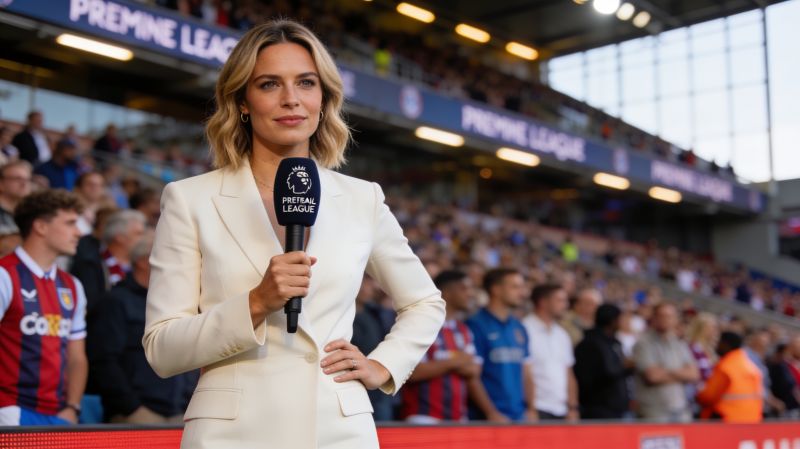
where users compile compilations of presenters' best moments—sometimes focused on their commentary, sometimes on their outfits. This duality frustrates those who want the conversation to stay on football. Yet ignoring the aesthetic dimension is naive. Football is entertainment, and broadcasters sell personalities as much as matches. I recall a Chelsea supporter telling me he follows two presenters specifically because their pre-match analysis 'feels like a conversation at the pub, not a lecture.' That authenticity is the real currency. The Goddess label sticks because it captures something genuine: these women have become cultural touchstones for a generation of fans who grew up watching them weekly.What distinguishes the best of them is refusal to be boxed in. Kelly Cates, who hosts BBC Radio 5 Live's coverage, has publicly pushed back against being reduced to her appearance. 'I'd rather be known for knowing the offside rule。' she said in a 2023 interview. That sentiment resonates with younger female fans. A 2022 survey by Women in Football found that 68% of female respondents believed media representation of women in football had improved, but only 41% felt they were taken seriously as analysts. The gap matters. When a presenter is dubbed a 'Goddess,' it can elevate visibility and also trivialize expertise. The most respected figures in this space—Somers, Woods, Cates—have navigated that tension by leaning into substance. Their longevity depends on it.
The 'Premier League Goddess' won't disappear. It is too embedded in fan vernacular, too useful for broadcasters seeking engagement. But its meaning is shifting. As more women occupy roles as commentators。referees, and club executives, the term's novelty fades. The next generation of presenters will likely inherit the label and redefine it—or discard it entirely. For now, it remains a useful lens: it reveals how football fandom processes gender, expertise, and desire, often messily. The women at the center of it, meanwhile, keep doing the job. That is the part worth watching.